Trading economics
Why the market price is not your buying price
A worked RCN example shows how selling terms, delivery costs and cash timing determine what a trader can afford to pay.
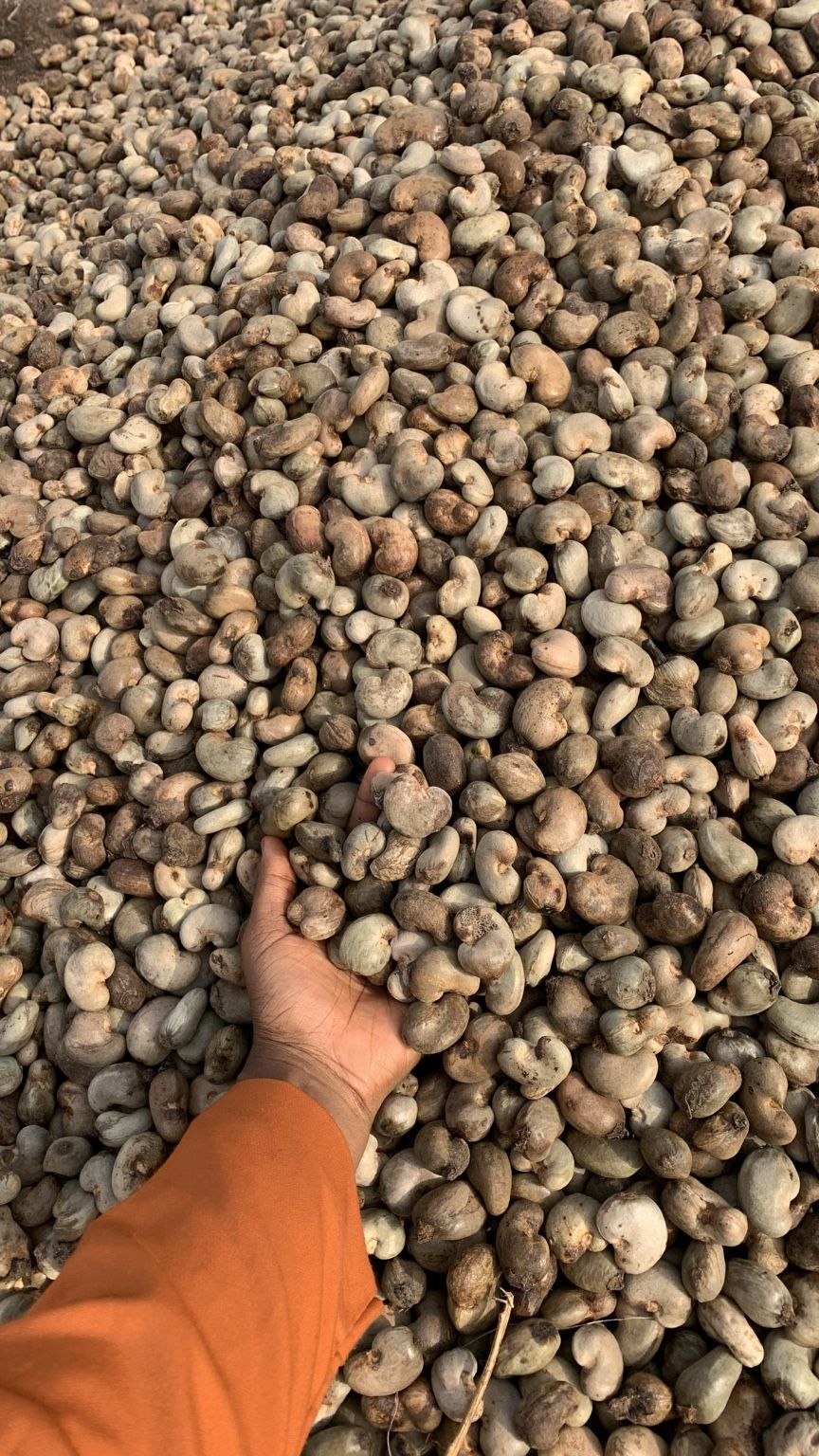
Someone announces a new cashew price in a trading group. Within minutes, suppliers expect every buyer to match it. Yet two buyers can hear the same market quote and arrive at different buying limits. Their customers, quality requirements, costs and payment schedules may be different. A quote becomes useful when you know the transaction behind it.
Find out what the quoted price includes
Before comparing offers, establish whether the price is farmgate, ex-warehouse or delivered. Confirm the quality, weight basis, quantity and payment timing. A delivered quote includes obligations that an ex-warehouse quote may leave with the buyer.
Ask whether the figure is an asking price, a completed transaction or a current executable offer. Record the date and the period for which it remains valid. A price without those details is an indication to investigate.
Work backwards from the sale
Consider an illustrative RCN order with a credible delivered selling value of ₦2,100 per saleable kilogram. Assume that fulfilling the order costs ₦150/kg and that the trader requires ₦100/kg contribution after those listed costs.
The resulting buying ceiling is ₦2,100 − ₦150 − ₦100 = ₦1,850/kg. The figures below are planning assumptions, not current market prices, AGM trading results or a recommended industry margin.
| Item | Naira per saleable kg |
|---|---|
| Credible delivered selling value | 2,100 |
| Fulfilment costs and allowances | −150 |
| Required contribution | −100 |
| Maximum material buying cost | 1,850 |
Put the missing costs back into the calculation
The cost allowance must reflect the actual order: collection, bags, loading, transport, inspection, storage, finance and applicable transaction charges. Document what is included so a cost is neither omitted nor counted twice.
If the purchased material still needs drying or sorting, convert the purchase into cost per saleable kilogram before comparing it with the ceiling. A 1,000 kg intake and a 900 kg saleable lot do not carry the same material cost per kilogram. Quality deductions also need an explicit assumption.
Treat cash timing as part of the deal
A buyer offering a higher price but paying substantially later may leave less usable contribution once funding and storage are included. Compare the amount earned and the time capital remains committed.
CBI and Oikocredit’s work with West African processors highlights the value of monthly forecasts, financial indicators and planned-versus-actual tracking. For a trading desk, the same discipline starts with an order-level cash schedule.
Reference: CBI: SME financing and cash-flow management in West African cashew processing, December 2024
Give the field team a decision rule
A useful buying instruction names the approved quality, delivery point, maximum price, quantity limit and expiry time. It also identifies who can approve an exception.
At AGM, our preparation discussions have centred on connecting buyer development with procurement economics. Every purchase should have a clear commercial route. When the local asking price exceeds the supported ceiling, the next step is to revisit the sale or costs before committing capital.