Field notes
Building quality from the farm
Why farmer relationships, careful handling and clear buying rules matter before the first bag reaches a warehouse.
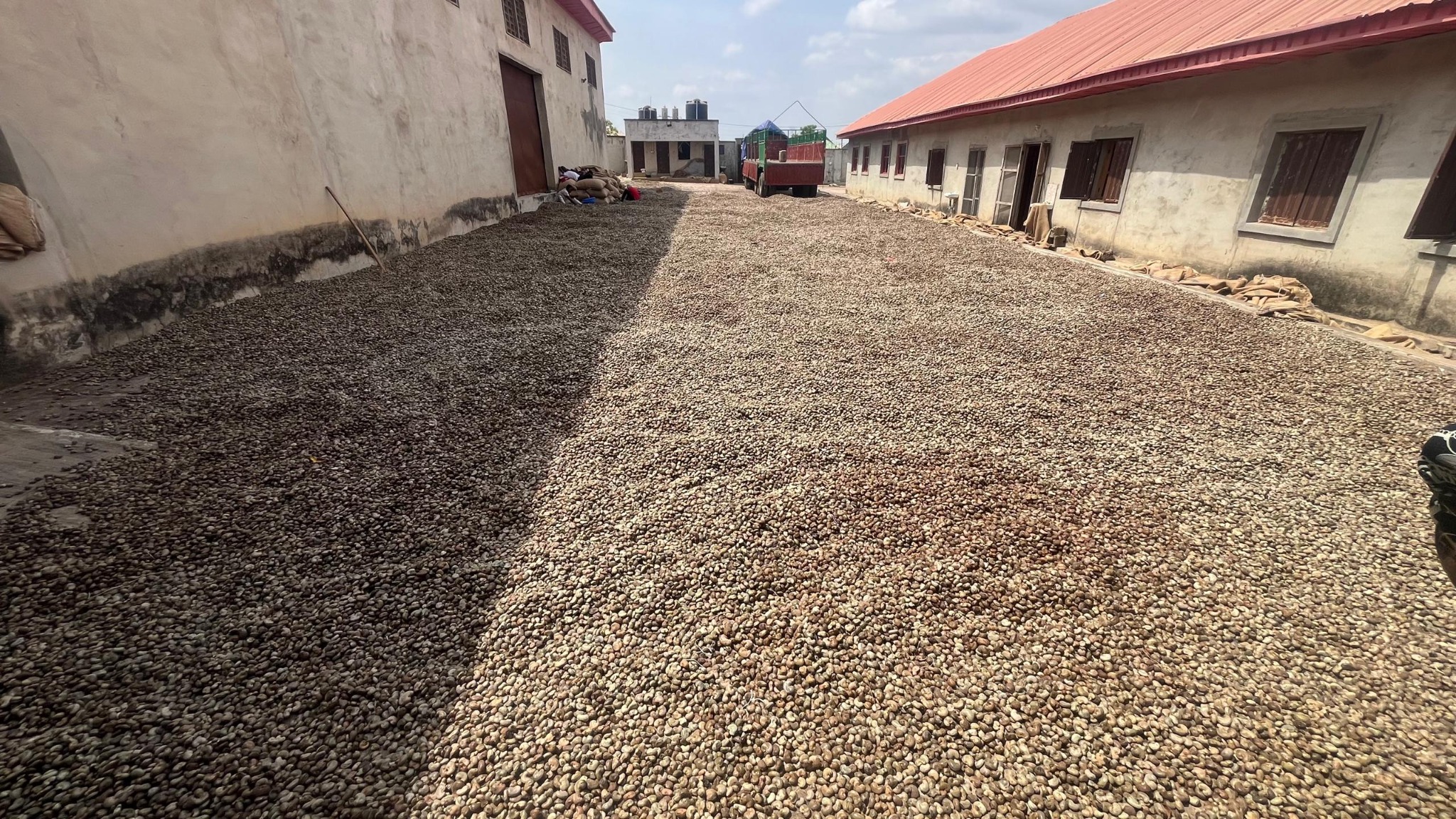
A warehouse inspection can identify a poor cashew lot. It cannot undo everything that happened before the nuts arrived. For AGM Global, working from Ogbomoso means thinking about quality as a relationship between the farm, the field buyer and the eventual processor.
Start with the buyer’s requirement
“Good cashew” needs a shared meaning. Before a buying campaign begins, the supplier and buyer should agree how moisture, kernel outturn, nut count and defects will be assessed. Otherwise, a field buyer may chase volume while the customer expects a different quality profile.
Translate the requirement into a short field instruction: what can be accepted, what needs drying or sorting, and what must be rejected. Give the person receiving each delivery authority to apply that instruction consistently.
Protect quality during collection and drying
Collect mature fallen nuts promptly and separate them from the apple. Dry on a clean, suitable surface, turn the nuts regularly and let them cool before bagging. Store bags off the floor in a dry, ventilated space. These handling principles are described in the IRD/ACA guide below.
For procurement, turn those principles into checks at handover. Record the condition received and the work still required. An attractive buying price can become expensive when additional handling and losses are ignored.
Reference: IRD / African Cashew Alliance: Cashew Business Basics, pp. 11–13
Make farmer clusters useful in practice
Our discussions about farmer clusters have centred on coordination. A practical starting model is a defined collection area, a named contact, an agreed delivery schedule and transparent weighing. Treat this as a model to develop and verify, rather than a promise of committed supply.
The cluster should make transactions easier for farmers as well as buyers. Explain how quality affects acceptance and price, issue a clear receipt, and agree when payment will arrive. A group that only passes messages around has not yet solved a procurement problem.
Keep a simple record for every delivery
A useful intake record connects the supplier to the product and the payment. At minimum, capture:
- Supplier or group name, collection area and delivery date.
- Lot reference, bag count, gross weight, tare and net weight.
- Sample results, acceptance decision and any required reconditioning.
- Agreed price, payment status and storage location.
Reward dependable supply
Review suppliers on accepted quality, reliable quantities and delivery timing alongside price. Share the results so recurring problems can be corrected before the next collection.
For AGM, the preparation priority is to connect sourcing relationships with repeatable buying discipline. The strongest procurement network is one whose deliveries can be assessed, paid for and traced with confidence.